


My son is delighted. It looks great.


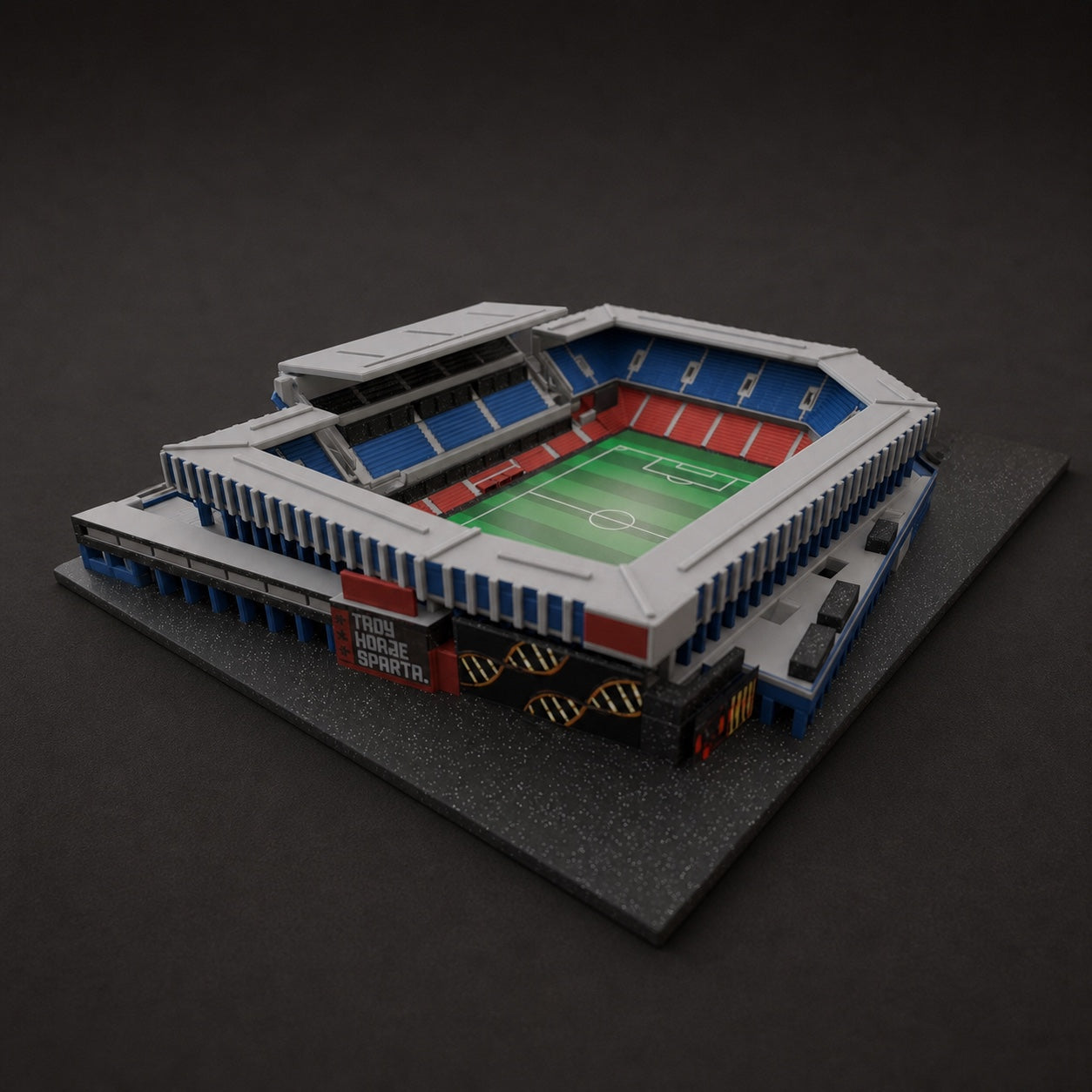


It began a few hundred metres away
Sparta played at Letná before the current stadium existed, on the site now occupied by the National Technical Museum. Facilities were simple, but this was where the first Iron Sparta took shape. Everyday life also centred on the canteen run by Karel Pešek-Káďa’s mother, where the team gathered after matches and training. The First World War delayed construction of a new ground beneath the water tower, and the club had to wait until 1917 for its permanent home.
13 May 1917: the first match at home
Sparta opened the new ground with a 3–2 win over Viktoria Plzeň. Antonín Janda-Očko, one of the defining players of that side, scored its first goal. The early stands were still modest. In 1921, a wooden English-style main stand for 1,700 spectators was completed in under two months and was then the largest of its kind in Central Europe. The team christened it with a 2–0 win over Danish champions KB Copenhagen.
A fire took part of the club’s memory
In April 1934, fire destroyed the wooden main stand. The loss included 180 trophies, club chronicles, kits and many other records. A reinforced-concrete main stand replaced it a few years later, and its core remains part of the stadium after subsequent alterations. German shelling caused further damage in 1945, though it was less severe than the fire.
From an enclosed arena to the Letná of today
Between 1967 and 1969, the other three stands were rebuilt, enclosing the ground and raising capacity to roughly 35,000. The complete 1994 reconstruction created the present form. Capacity fell to 20,000, but every spectator now had their own seat and the ground met the strict standards of the time. In 2002, Letná gained a heated pitch, new seats, the large SPARTA lettering, video screens and a more open connection between supporters and the field. Its official capacity today is 18,262 and the pitch measures 105 × 68 metres. Names and details change, but the footprint and closeness of the stands still make Letná instantly recognisable.